
Key Takeaways
- Airflow tooth polishing uses a stream of air, warm water and fine powder to gently remove plaque and surface stains more effectively than traditional cleaning.
- It can reach hard-to-access areas and is ideal for patients with sensitive teeth, braces, implants or restorations.
- Airflow helps reduce biofilm buildup, improving gum health and supporting preventive care.
- This technology provides a more comfortable and quicker appointment experience.
- Airflow should complement, not always replace, traditional scale and polish cleaning for comprehensive oral health.
When it comes to dental hygiene, most people think of the standard scale and polish. This traditional method has been the backbone of professional dental cleaning for years. At Morrin Dental, we also offer a modern alternative called Airflow tooth polishing. This innovative technology enhances your cleaning, especially for stain removal and gum health, in a way that many patients find gentler and more effective.
In this article, we explore what Airflow polishing is, how it works, and why it may be worth adding to your dental hygiene routine here in Newcastle and the wider Hunter region.
What Is Airflow Tooth Polishing?
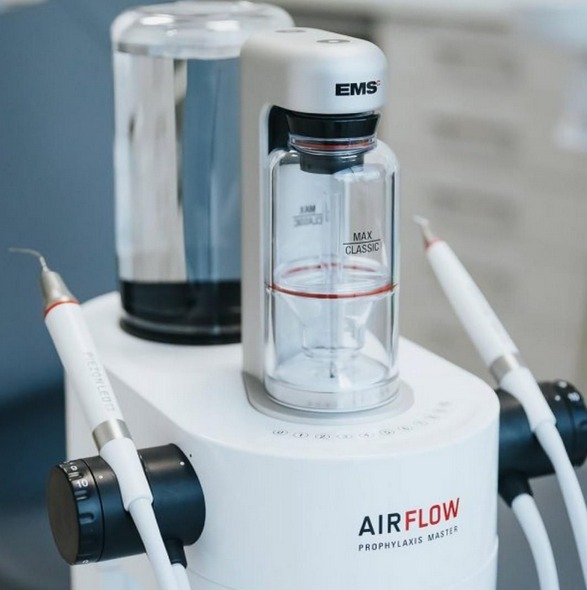
Airflow tooth polishing is an advanced dental cleaning technique that uses a controlled stream of air, warm water and very fine powder particles to remove plaque, soft deposits and surface stains from teeth and gums.
Unlike a traditional clean that relies on scraping and polishing with tools that physically touch the tooth, the Airflow system delivers a gentle spray that lifts away debris with minimal pressure. This can make the experience more comfortable, especially for people with sensitive teeth or gums.
It’s important to understand that Airflow is not a replacement for all aspects of traditional cleaning. Hard, hardened tartar (calculus) still requires manual or ultrasonic scaling. What Airflow does exceptionally well is biofilm, plaque and stain removal, often in areas that conventional tools struggle to reach.
How Airflow Works
During an Airflow cleaning appointment:
- The hygienist uses a handpiece that sprays a fine, warm mixture of air, water and powder onto the teeth.
- This gentle stream dislodges plaque, bacteria and surface stains.
- The process also helps clean below the gumline and between teeth, areas where bacteria often hide.
The powder used is safe and specifically designed to be gentle on enamel and soft tissues. The stream reaches places that traditional cleaning tools may miss, making Airflow a strong addition to a preventive dental hygiene program.
Benefits Beyond Standard Cleaning
1. Superior Stain Removal
Airflow is particularly effective at lifting surface stains caused by coffee, tea, red wine, smoking and coloured foods. Patients often notice a brighter, cleaner smile right away.
2. Improved Comfort
Because Airflow does not rely on scraping or rotating instruments directly on the tooth surface, many patients find it more comfortable than conventional scaling. This is especially true for people with sensitive teeth, receding gums or dental anxiety.
This comfort can make dental visits more pleasant and encourage regular attendance, which is key to long-term oral health.
3. Enhanced Gum Health
Airflow targets dental biofilm and bacteria that contribute to gum inflammation and gum disease. By effectively disrupting this biofilm, Airflow supports healthier gums and can slow disease progression.
This makes Airflow a valuable part of a preventive care routine, particularly for people with early gum disease or those at higher risk.
4. Ideal for Orthodontics and Restorations
Cleaning around braces, bridges, crowns and implants can be challenging with traditional methods. The fine spray from Airflow reaches these tricky areas without damaging appliances or restorations, helping keep them clean and healthy.
5. Efficient and Time-Saving
Airflow treatments are often quicker than a full scale and polish, because the fine powder spray reaches many surfaces at once. This can shorten appointment times and reduce overall chair time.
This efficiency is especially helpful for busy parents and families who need quality dental care that fits their lives.
When Is Airflow Most Valuable?
Airflow tooth polishing is especially beneficial when the goal is to boost your routine hygiene clean and help maintain oral health between regular six-monthly visits. Here are some common situations where Airflow may be recommended:
- When you regularly consume staining beverages or foods.
- If you have sensitive teeth or dental anxiety.
- When you have orthodontic braces or fixed appliances.
- For people with dental implants or cosmetic restorations.
- As part of gum disease prevention and biofilm management.
Airflow can be used alongside traditional cleaning techniques for a comprehensive approach to oral hygiene.
Does Airflow Replace Standard Cleaning?
It’s important to be clear that Airflow tooth polishing is complementary to, not always a replacement for, traditional dental scaling and polishing. Traditional methods are still essential for removing hardened tartar (calculus) and for deep cleaning procedures if gum disease is present.
A dental hygienist will assess your individual needs and recommend the best approach. In many cases, a combination of Airflow for surface cleaning and traditional scaling for tartar removal offers excellent results.
Final Thoughts
So, is Airflow tooth polishing worth it? For many patients, yes. Airflow adds a level of comfort, stain removal and biofilm disruption that enhances your overall dental hygiene experience. It helps keep teeth and gums healthier between regular check-ups and can make each visit more comfortable and efficient.
At Morrin Dental, our team can tailor your hygiene appointments so you get the right combination of traditional cleaning and Airflow technology for your oral health goals.
If you want to learn more about whether Airflow is right for you, talk to our team during your next visit or call us to book a consultation.