
Key Takeaways
- Painless Protection: Fissure sealants form a smooth, protective barrier over the deep grooves of back teeth, locking out plaque and food particles.
- No Drilling or Needles: Placing a sealant is quick, completely non-invasive, and comfortable for kids.
- Ideal Timing: Sealants are most effective when placed shortly after permanent molars erupt, usually around age 6 and again at age 12.
- CDBS Eligible: Sealants are covered under the Child Dental Benefits Schedule (CDBS) for eligible Newcastle families.
If you look closely at the chewing surfaces of your child’s back teeth (the molars), you will notice a series of tiny pits and narrow valleys. In dentistry, these are called fissures.
In the real world, these grooves can be microscopic; so narrow that a single toothbrush bristle cannot physically fit inside to sweep out food debris. For primary schoolers who are still mastering their brushing technique, these deep crevices are prime real estate for cavity-causing bacteria.
At Morrin Dental, one of the most effective ways we protect young teeth from decay is with fissure sealants. It is a simple, proactive treatment that acts like a raincoat for your child’s molars.
What Exactly Is a Fissure Sealant?
A fissure sealant is a tough, tooth-coloured coating (usually made of a durable resin) that is painted directly into the deep grooves of a molar.
Once applied, a special curing light hardens the liquid material in seconds. By “sealing off” those deep pits, we create a smooth surface that toothbrush bristles can easily sweep clean, making it almost impossible for food and bacteria to hide underneath.
Why Are They So Effective?
Studies consistently show that fissure sealants can reduce the risk of decay in back molars by up to 80%.
Because back molars do around 90% of the heavy lifting when kids chew their meals, keeping them healthy is crucial. Sealants provide an extra layer of protection during the critical years when kids are learning proper brushing habits and enjoy the occasional sweet treat.
The Ideal Age Ranges for Sealants
While sealants can occasionally be used on baby teeth or adult molars if a person is at high risk for decay, there are two key “windows of opportunity” when we most commonly recommend them:
- Ages 6 to 7 (The First Permanent Molars): Around age six, your child’s first adult molars erupt right at the back of the mouth. Because these teeth do not replace any baby teeth, parents sometimes don’t realise they have arrived. Applying sealants as soon as these teeth are fully through the gums locks out decay right from day one.
- Ages 11 to 13 (The Second Permanent Molars): As your child approaches high school, their second set of permanent molars emerges further back. Sealing these new teeth protects them through the busy high school years when diet and hygiene routines can fluctuate.
What Is the Appointment Like for a Child?
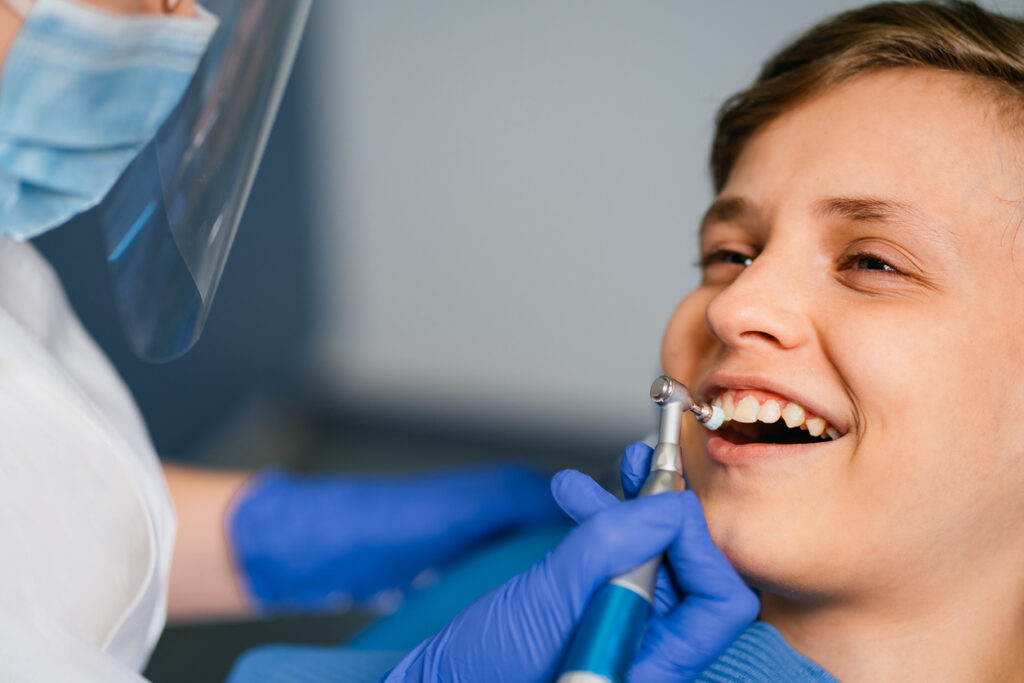
If your child is nervous about dental visits, you can reassure them that getting a sealant is one of the easiest appointments they will ever have.
- Zero Needles or Drilling: The procedure is entirely painless and non-invasive.
- Quick Process: We gently polish and clean the tooth, wash it with water, paint on the clear or tooth-coloured resin, and shine a small blue light over it to set it hard. It takes just a few minutes per tooth.
- Immediate Use: Your child can eat, drink, and play as normal as soon as they walk out of the clinic!
Covered Under the Child Dental Benefits Schedule (CDBS)
The Australian Government’s Child Dental Benefits Schedule (CDBS) covers fissure sealants as a core preventive service. Eligible children aged 2–17 can access up to $1,095 over two calendar years for bulk-billed dental services like cleanings, check-ups, and sealants.
Our Newcastle team can instantly verify your eligibility using your Medicare card, making it straightforward to protect your child’s adult teeth without out-of-pocket costs.
Final Thoughts
Fissure sealants are a classic example of “an ounce of prevention is worth a pound of cure.” By sealing deep grooves early, Newcastle parents can help their children avoid the need for fillings later in life, keeping their adult teeth strong and intact. If your child is around 6 or 12 years old, ask us about sealants during their next preventive visit.